Treasurer / ALM officer
Owns the position and wants the measurement, stress testing, and plan kept current without it taking over the quarter.
NineFive helps community bank treasurers and ALCO committees measure liquidity, stress it against deposit runoff and funding shocks, and keep a contingency funding plan and early-warning indicators current. The point is to know the bank can fund growth and outflows before either one becomes urgent.
Quarterly, plus triggers
A full refresh each quarter and an update when an indicator is hit
Sources, uses & stress
Deposit runoff, funding shock, and wholesale capacity
Contingency funding plan
Built with your team, reviewed every quarter
NineFive keeps the four parts of a community bank liquidity program current: measurement, stress testing, the contingency funding plan, and the early-warning indicators.
On-balance-sheet liquidity, cash flow from the loan and investment portfolios, deposit trends, and available wholesale capacity, laid out over a forward horizon.
Deposit runoff by category, including uninsured and concentrated balances, combined with loan growth and a funding shock, with runoff assumptions anchored to peer behavior.
Stages, triggers, funding sources at each stage, and roles, written so the plan can actually be run under pressure rather than filed and forgotten.
The metrics that move first when liquidity tightens, tracked each quarter against thresholds your ALCO sets, with a clear signal when one is breached.
Owns the position and wants the measurement, stress testing, and plan kept current without it taking over the quarter.
Answers to the board and the examiners for liquidity and wants a program that holds up.
Sets the thresholds and reviews the indicators and the plan every quarter.
Wants to know the bank can fund itself through a stress event, in plain terms.
NineFive builds the measurement and stress analysis in BankCore from your call report data and deposit detail, sets runoff and funding assumptions with your team, and keeps the contingency funding plan and indicator thresholds current. If an early-warning indicator is breached, NineFive updates the analysis outside the quarterly cycle.
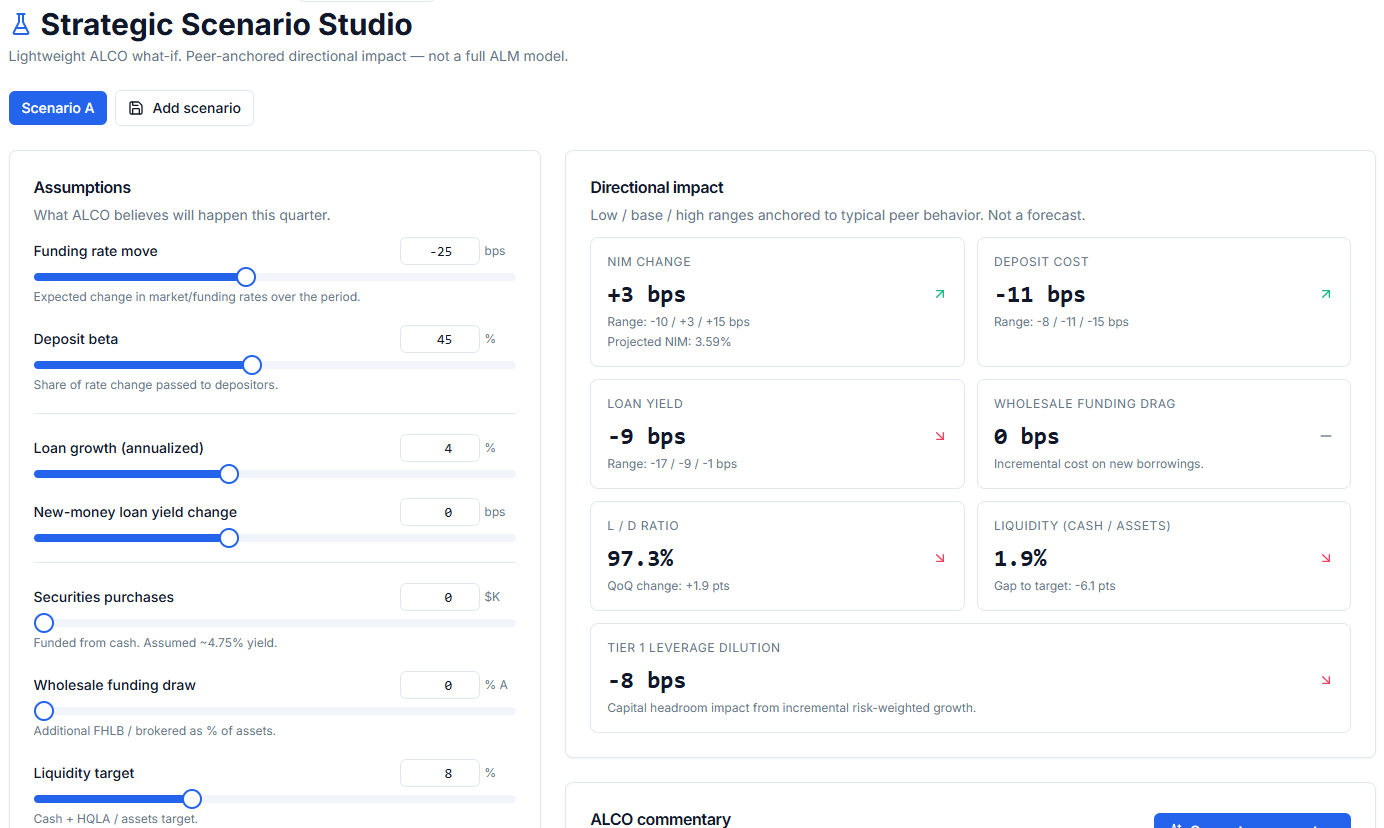
Liquidity risk management is the work of making sure a bank can fund loan growth and deposit outflows without selling assets at a loss or leaning on expensive wholesale funding. It covers measuring sources and uses of funds, stressing them, keeping a contingency funding plan, and tracking early-warning indicators. NineFive does this work each quarter and when a trigger is hit.
A contingency funding plan is a written playbook for a liquidity event: the stress scenarios the bank could face, the funding sources available at each stage, who does what, and the indicators that move the bank from one stage to the next. NineFive builds it with your team and reviews it each quarter.
Early-warning indicators are the metrics that signal liquidity pressure before it becomes a problem: deposit trends, concentration, wholesale reliance, unused capacity, pledged collateral, and pricing pressure. NineFive tracks them each quarter against thresholds your ALCO sets.
NineFive runs deposit runoff scenarios by category, including uninsured and concentrated balances, alongside a loan growth and funding shock, and anchors the runoff assumptions to how peer banks have behaved in past cycles, using call report data in BankCore.
Yes. The analysis includes Federal Home Loan Bank capacity, Federal Reserve facilities, brokered and listing-service capacity, fed funds lines, and pledged and unpledged collateral.
Tell us the outflow you are worried about, and we will show you where the bank stands and what the plan would do.